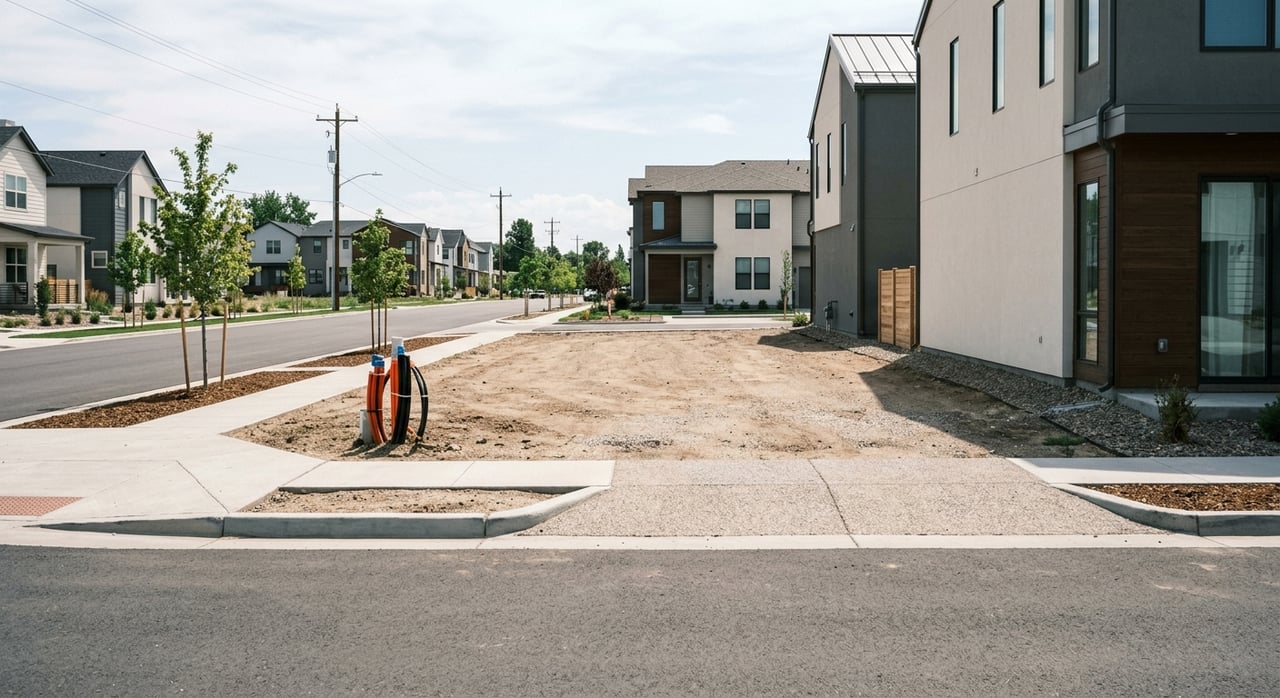
If you own land in Northeast Houston, you may already know that developers do not price a tract based on size alone. They look for risk, delay, and missing information first. The good news is that when you position your property the right way, you can make it easier for serious buyers to underwrite and easier for yourself to attract more credible offers. Let’s dive in.
Why positioning matters to developers
When a developer reviews land in Northeast Houston, the first question is usually not, “How much acreage is this?” It is, “Can this site actually move through the approval path without major surprises?” That shift in perspective matters if you want to market your land effectively.
A raw parcel becomes more valuable to a serious buyer when the main questions already have organized, documented answers. In this market, that often means clear access, known floodplain conditions, utility direction, plat status, and a clean understanding of surrounding conditions.
Start with access and frontage
For many Northeast Houston sites, access is one of the first underwriting filters. A buyer needs to know whether the tract has legal access, whether a driveway is feasible, and whether the available frontage supports the intended use.
This matters even more if the property touches a state highway or frontage road. TxDOT regulates the number, location, spacing, design, and construction of access connections on state highways, and direct access can be restricted near ramp connections.
If your site has complicated frontage, limited curb access, or uncertain driveway placement, that can affect price and timeline. If you already have documents that clarify access rights, frontage dimensions, or recorded easements, those should be easy to review from the start.
What buyers want to see on access
A developer will usually want a practical picture of how vehicles reach the site and how that access fits the likely development plan. Helpful materials often include:
- A current survey
- Frontage measurements
- Recorded access easements, if any
- Adjacent street information
- Any known restrictions affecting driveway placement
Understand the surrounding property context
In Houston, surrounding conditions are part of the real conversation, not just a map note. The City of Houston’s site plan review requires adjacent land use, right-of-way width of adjacent streets, setbacks, driveways, and contiguous property under one ownership or legal interest to be shown.
That means a developer is not only looking at your tract in isolation. They are also looking at what sits next door, what streets serve the area, and whether nearby parcels or assemblage opportunities change the development potential.
If your property is part of a larger ownership pattern, or if you control contiguous land, that can be meaningful in how the site is evaluated. Even when a buyer only wants your parcel, they will still want a clear picture of how the tract fits into the block or corridor.
Floodplain, drainage, and detention can shape value
Floodplain and drainage issues can quickly change the math on a land deal. Harris County requires floodplain development permits for work in the floodplain, and properties in the Special Flood Hazard Area are subject to floodplain management regulations.
That does not automatically make a site unmarketable. It does mean a developer will want clarity early, because drainage standards, detention needs, and downstream criteria can affect layout, yield, and budget.
The City’s stormwater standards also treat detention and downstream drainage as major development issues. Depending on the receiving outfall and who maintains it, the project path can look very different from one tract to another.
Floodplain and drainage documents to gather
If you have any of the following, they can help reduce uncertainty for a buyer:
- Floodplain maps or determinations
- Prior drainage studies
- Grading information
- Detention concepts
- Existing civil plans or engineering notes
- Permit history related to floodplain work
Know which jurisdiction controls the process
One of the biggest mistakes landowners make is assuming every Northeast Houston tract follows the same approval path. It does not. Jurisdiction can change what gets reviewed, who reviews it, and what timeline a buyer should expect.
Houston does not have zoning. Instead, development is governed by ordinance codes and Chapter 42, and city review focuses on issues like plats, rights-of-way, building lines, setbacks, parking, landscaping, and access.
Nearby tracts can still follow different paths depending on whether they are in the City of Houston, in Houston’s ETJ, or in unincorporated Harris County. Harris County also regulates items like floodplain management, on-site sewage facilities, driveways, and signs in unincorporated areas.
For a developer, this is not a technical footnote. It is a core pricing issue because the wrong assumptions about jurisdiction can lead to delays, redesigns, or extra soft costs.
Platting is often the threshold issue
If your land is undeveloped, platting may be one of the first items a developer studies. The Houston Planning Commission states that undeveloped land must be platted before development occurs.
A replat can also change lot layout, reserves, setback lines, easements, or property use. If a proposed plat violates deed restrictions, it must be disapproved, and a variance requires a documented hardship.
This is why plat status should be part of your marketing package from day one. If the property is already platted, say so clearly. If it is not, a buyer will want to know what the likely path looks like and whether there are any known obstacles.
Timing and notice can affect the sale
Houston states that plats must be approved or disapproved within 30 days, or they are automatically approved if no action is taken. That sounds simple, but the practical timeline can still be affected by the full recordation process and any follow-up steps.
For some replats that require a public hearing, residents within 500 feet can receive mailed notice and a posted sign. That can add another layer of stakeholder review to the schedule, which buyers often factor into their underwriting.
Build a developer-ready marketing package
If you want stronger offers, think less like a traditional seller and more like a project sponsor preparing an underwriting file. The goal is to reduce unknowns before the buyer has to spend money on civil drawings, platting work, and pricing.
The most effective land packages in Northeast Houston usually organize the exact issues developers need to answer first. That can make your tract easier to compare, easier to price, and easier to move into serious discussions.
Core documents to assemble
Start with the basics that local reviewers commonly require or rely on:
- Current survey
- Legal description
- Recorded subdivision plat, if available
- Deeds and ownership documents
- HCAD parcel and account information
- Property address, if assigned
Add the records that reduce risk
Then gather the items that answer likely underwriting questions:
- Recorded easements
- Access documents
- Floodplain materials
- Drainage or grading information
- Utility service information
- Any deed restrictions or known recorded constraints
Include a simple site-summary sheet
A concise site summary can help a buyer review the tract faster. Even before permit stage, a simplified, site-plan-style overview is useful when it shows practical items such as:
- Adjacent street widths
- Setbacks
- Driveway locations or likely access points
- Parking assumptions, if relevant
- Building dimensions or envelope concepts, if known
- Adjacent land uses
Utility path is not a minor detail
Utilities often sit in the background until they become a major deal issue. For some sites in Harris County, a buyer may need to confirm whether the property will be served by extended utility capacity, a new utility district, or well and septic.
Harris County also notes that an OSSF subdivision planning report is required before plat approval when a project is outside a known public sewer service area. That means utility uncertainty can affect not just cost, but also the approval sequence.
If you already know how the site is likely to be served, that information can save time. If you do not know, identifying that gap early is still helpful because it lets buyers underwrite the property more realistically.
Answer the questions behind the offer
Most developer offers come down to a short list of practical questions. Can the tract be platted? Does it have legal access? Is it in a floodplain or detention-restricted area? What utilities are available? Are there deed restrictions or nearby replat issues that could create friction?
If your marketing package helps answer those questions clearly, you are more likely to attract buyers who can move from interest to pricing. If those questions remain open, buyers may lower their offer, extend diligence, or walk away.
How better positioning can help your outcome
Positioning your Northeast Houston land for developers is really about making the site easier to trust. You are not trying to eliminate every development challenge. You are showing that the key facts are organized, the jurisdiction is understood, and the likely issues are visible early.
That kind of preparation can support stronger negotiations and more credible timelines. It also helps separate serious buyers from casual inquiries, which matters when you want a smoother path from marketing to contract.
If you are preparing to sell land in Northeast Houston, a team that understands land acquisition, entitlement coordination, and feasibility can help you present the property in a way developers actually underwrite. To talk through your site strategy, utility questions, access issues, or plat status, Kimberly Lane Properties Group at Compass can help you build a more investor-ready path to market.
FAQs
What do developers look at first when buying Northeast Houston land?
- Developers often start with legal access, frontage, floodplain conditions, drainage constraints, utility path, plat status, and recorded restrictions.
Does Houston zoning affect Northeast Houston land sales?
- Houston does not have zoning, but development is still governed by ordinance codes and Chapter 42, with review focused on plats, setbacks, rights-of-way, parking, landscaping, and access.
Does undeveloped land in Houston need to be platted before development?
- Yes, the Houston Planning Commission states that undeveloped land must be platted before development occurs.
Why does floodplain information matter for Harris County land?
- Floodplain status matters because work in the floodplain requires permits in Harris County, and floodplain or drainage constraints can affect site design, budget, and development timeline.
What documents should landowners gather before marketing land to developers in Northeast Houston?
- A strong starting package usually includes a current survey, legal description, deeds, plat information, HCAD parcel details, easements, access records, floodplain materials, and utility-related information.
Can two nearby Northeast Houston tracts have different approval paths?
- Yes, properties may follow different processes depending on whether they are in the City of Houston, in Houston’s ETJ, or in unincorporated Harris County.