If you are eyeing Greater Third Ward for your next infill or small multifamily project, you are not alone. Demand near the University of Houston and Texas Southern University has kept this pocket on investor shortlists, but returns hinge on getting the site, title, and timeline right. In this guide, you will see the demand drivers, lot realities, deed‑restriction checks, permitting steps, and real risks that move your proforma in either direction. Let’s dive in.
Why Greater Third Ward draws capital
Location and neighborhood context
Greater Third Ward sits just southeast of Downtown Houston, bounded by I‑45 to the north and State Highway 288 to the west. It includes varied micro‑markets, from Washington Terrace to Riverside Terrace and blocks near UH and TSU. For a quick overview of boundaries and civic context, review the City of Houston’s Super Neighborhood 67 summary on the official Greater Third Ward page.
University demand that endures
Proximity to two major campuses is a durable driver. The University of Houston’s institutional profile reports about 46,600 students in fall 2023. Texas Southern University enrolls roughly 8,400 to 8,500 students based on DataUSA’s TSU profile. Student‑oriented rentals, faculty and staff housing, and near‑campus convenience continue to support absorption for well‑located product.
Public redevelopment in motion
Cuney Homes and adjacent sites are part of a HUD Choice Neighborhoods Implementation plan led by the Houston Housing Authority and partners. The implementation grant was announced in July 2024, with a multi‑year, multi‑phase delivery approach that will add mixed‑income housing and neighborhood infrastructure. See the grant announcement and the planned phasing on the MoveForwardHouston timeline. Expect temporary relocation activity, periodic construction impacts, and heightened community attention on private projects near these sites.
Rents, comps, and who you will lease to
Listing snapshots show many Greater Third Ward rentals marketed in the low‑$1,000s, with neighborhood averages near about $1,100 at the time of recent reporting. Use listing sites for a quick screen, such as the Greater Third Ward rent snapshot on Zumper, then verify with local property managers and campus housing offices for real operating comps by unit type and finish level. Underwrite conservative lease‑up and a vacancy premium if you are within active public‑project zones.
Sites, lots, and deed‑restriction realities
Typical infill lot patterns
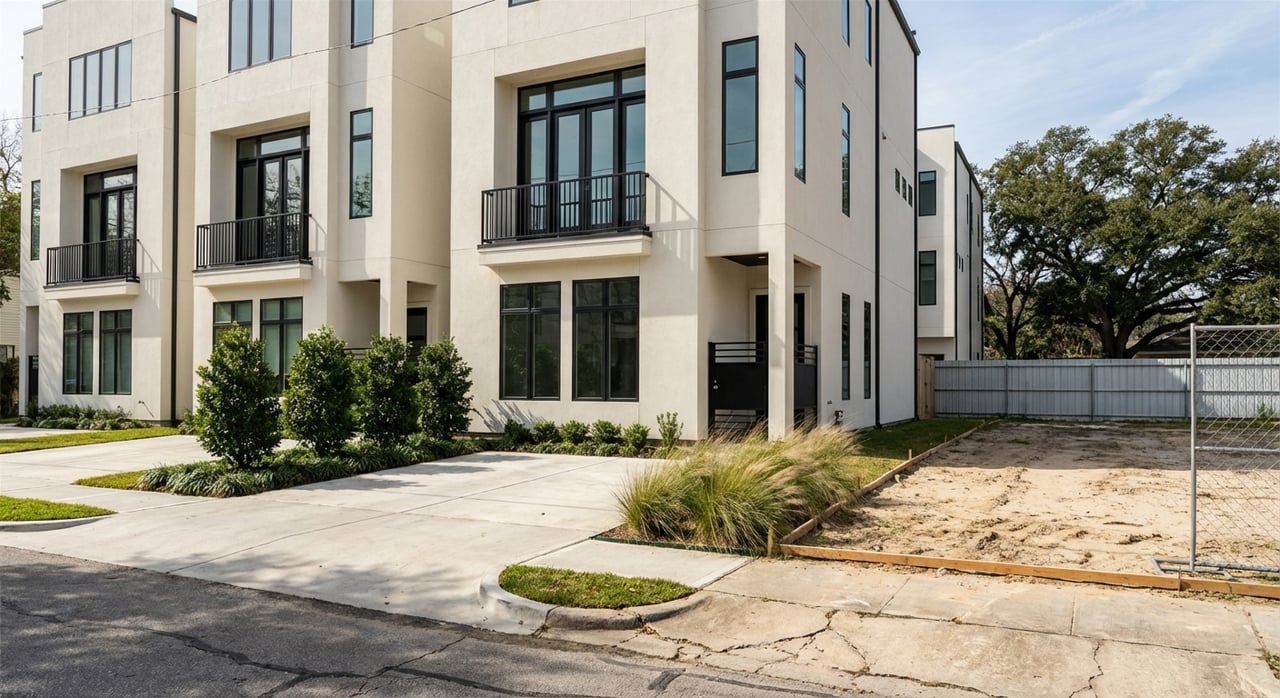
Inner‑Loop platting in Third Ward includes many narrow frontages, often around 25 to 50 feet, with depths near 100 to 125 feet. That geometry favors rear‑loaded townhomes, duplexes, single‑family infill, or small walk‑ups on corner or assembled parcels. Always confirm the recorded plat, setbacks, and any utility easements before committing to a building footprint.
No citywide zoning, stronger private controls
Houston does not have citywide zoning. Development control runs through subdivision rules, building codes, and private deed restrictions. The City outlines this framework on its Planning and Development Regulations page. In practice, recorded covenants can be more restrictive than municipal codes. Your title work and survey should reveal building lines, minimum lot sizes, or use limits that directly shape what you can build and how you park it.
The must‑do site checklist
- Pull the recorded plat and order a current boundary survey that shows all building lines and easements.
- Have title abstract all recorded CC&Rs and any supplemental restrictions. Get the instrument numbers in writing.
- Confirm whether the site sits inside a special district that adds rules or incentives.
- If the parcel is an assemblage of former tax‑delinquent lots, budget time for title cures and possible remediation.
Entitlement path and realistic timelines
The typical approval sequence
Plan for a linear set of reviews with potential correction cycles. A practical summary of Houston’s process is outlined in this entitlement and permitting overview:
- Due diligence and title/survey review, often 30 to 60 days.
- Plat, replat, or lot recombination when needed, with statutory review windows.
- Site plan and multi‑department review through the Houston Permitting Center.
- Building plan technical review and permits, with inspections and phased permits available.
Calendar guides you can actually use
- Single‑lot infill, such as a new house or duplex: plan 3 to 6 months from contract to permit, plus about 4 to 9 months for construction based on scope and finishes. Townhome stacks can take longer, especially if a replat is required.
- Small multifamily, roughly 8 to 30 units: plan 6 to 12 or more months for entitlements and plan review, plus about 12 to 24 months of construction, depending on utilities, foundations, and parking.
Bottlenecks to model
- Incomplete submittals that trigger multiple correction cycles, often 1 to 3 rounds.
- Utility capacity constraints that require off‑site work or extended coordination.
- Floodplain and base flood elevation requirements that increase foundation costs in mapped areas. Verify early in diligence and bake premiums into your plan.
Community engagement that de‑risks your proforma
Third Ward has active civic stakeholders, including the Third Ward Redevelopment Council, Project Row Houses, Emancipation Park Conservancy, and multiple neighborhood clubs and super‑neighborhood groups. Engage early on any sizable parcel or multi‑unit plan. Publish a simple benefits sheet that addresses parking management, landscaping, local hiring, and on‑site services. During the Choice Neighborhoods buildout, projects that coordinate construction timing and communication tend to face fewer surprises at City Council or in the press.
Underwriting tips and sensitivities that matter
- Use conservative base rents and validate with professional managers, not just listings. Near campus, program for seasonality in pre‑leasing.
- Stress your hard costs. Industry analysis points to substantial construction inflation since 2020, so include real contingencies. For context on inflation risk, see this recent construction cost overview.
- Run downside scenarios. Model 6 to 12 month entitlement slips, 10 to 25 percent hard‑cost overruns, and a modest vacancy premium at stabilization, especially within the public‑project radius.
- Align exit to product. Stabilized small multifamily often trades to local 1031 or small institutional buyers. Townhomes and small single‑family infill can exit to retail buyers, which ties performance to broader mortgage cycles.
Acquisition‑ready checklist
- Filter to parcels with clean title indications and a recent survey or recorded plat available.
- Screen for proximity to UH and TSU, transit, and neighborhood amenities within 0.5 to 1 mile, then verify comps with local managers.
- Engage your team before going hard: title, boundary surveyor, civil engineer for drainage, a local GC for schematic hard‑costs, and a permitting consultant or GC with plan‑review services.
- If you are near Cuney Homes or other public sites, speak with Choice Neighborhoods staff and local leaders early to learn phasing and identify voluntary benefits you can integrate.
- Keep a design‑to‑permit contingency of 10 to 20 percent of hard costs in today’s market, and run hold periods with cap‑rate expansion scenarios.
Where Kimberly Lane Properties Group at Compass fits
You want more than listings. You want a partner who can help you source, underwrite, entitle, build, and sell. Kimberly Lane Properties Group at Compass combines white‑glove brokerage with hands‑on development delivery and investor advisory. Services include buyer and seller representation, leasing, land acquisition and entitlement coordination, feasibility and proforma modeling, development management, and marketing and disposition for new‑construction infill.
If you are ready to evaluate Greater Third Ward sites or pressure‑test a deal, we can bring the local data, permitting know‑how, and sales engine to close the loop. Book a strategy call with Kimberly Lane Properties Group at Compass.
FAQs
What makes Greater Third Ward attractive for student rentals?
- Two nearby campuses drive steady demand. UH reports about 46,600 students, and TSU enrolls roughly 8,400 to 8,500, which supports absorption for well‑located, well‑managed rentals.
How long does permitting take for an 8 to 20 unit project in Greater Third Ward?
- Plan roughly 6 to 12 or more months for entitlements and plan review, then about 12 to 24 months for construction, with timeline driven by utilities, site complexity, and correction cycles.
How do deed restrictions affect a site in a city without zoning?
- In Houston, private deed restrictions often set setbacks, lot sizes, or use limits that can be stricter than city rules, so your title work and survey are critical to define the true buildable envelope.
How will the Cuney Homes Choice Neighborhoods redevelopment affect near‑term investments?
- Expect phased construction and relocation activity to influence lease‑up and community expectations in nearby blocks, with long‑term supply and infrastructure improvements creating future upside.
What rent should I underwrite for a 1‑bedroom near the campuses today?
- Listing snapshots show many Third Ward units marketed in the low‑$1,000s, with averages near about $1,100, but verify with local managers and campus housing for operating comps.
Do I need to worry about floodplains in this submarket?
- Yes, check flood maps during diligence, confirm base flood elevation and drainage requirements, and add foundation and insurance premiums into your budget if applicable.